

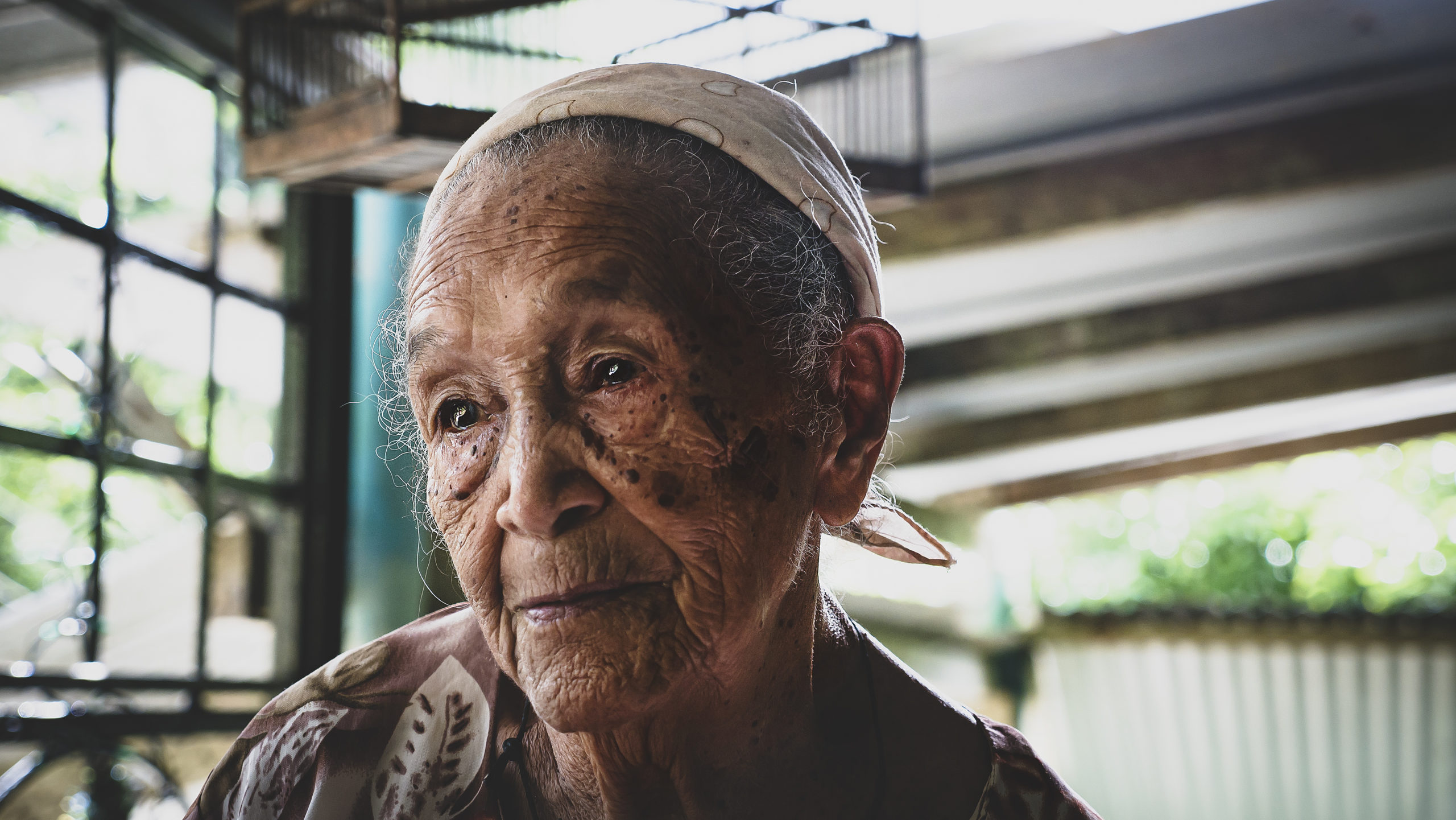
“My vice is coffee.”
Between the notes of the calypso serenade – lyrics learned decades before I was born – Julia’s eyes glimmer. Continuing her revelation, she says at the top of her lungs, “dark coffee eh, no milk.”
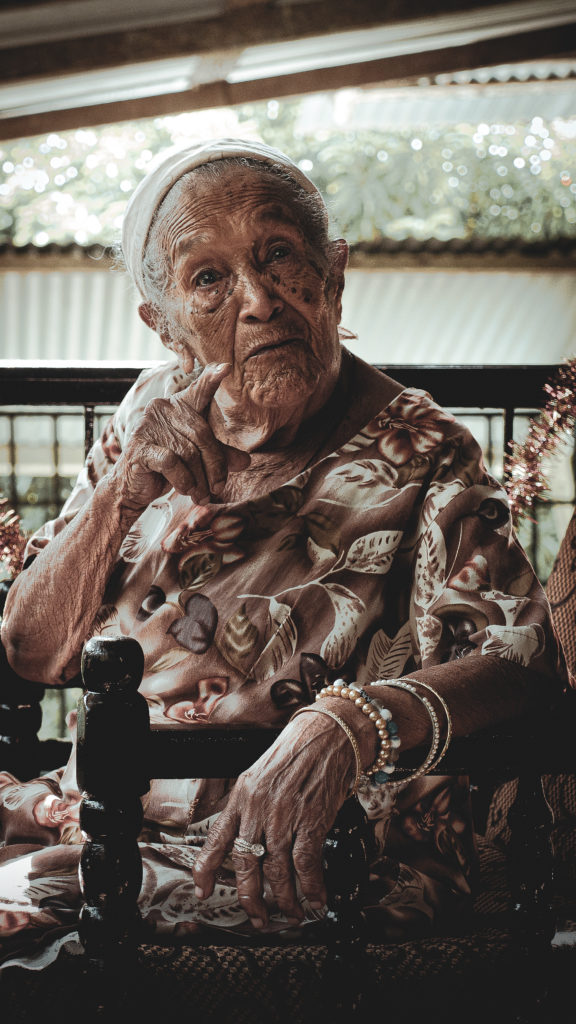
She takes a break from her singing to recount a story from the first world war. “Food was scarce in them times. They would give us ration cards to make sure everybody get something to eat.” At the end, she turns to us, her eyes reminiscing upward as other memories drift in. “I never had no education you know,” she says looking at no one, but everyone, at the same time. Her gaze reaches you as an inquiry – a test you feel strangely obligated to pass. Her stories are spoken, escaping her inability to read or write – a token of a life spent in nature and never in a classroom.
Surrounded by her family on the first day of 2021, anecdotes drift in and out of the conversation. As another memory reaches the tip of her tongue, Julia gets up to go to her bedroom. Every footstep is a triumph. She beckons us to come with her, to show us her room. Laden along the walls are images of Jesus. A staunch Catholic, she leans over, kissing each photo as she tells us of her love for Him.
She then brings gifts. Yam grown at home, neighbouring the cocoa, peppers, string-beans, breadfruit and anthuriums that flourish in the Aripo soil.
Another triumphant walk back to the living room; another anecdote drifts in – of Julia walking a quarter mile every day from home to the village to get a bus into Arima. As I understand it, this habit only stopped well after she turned eighty.
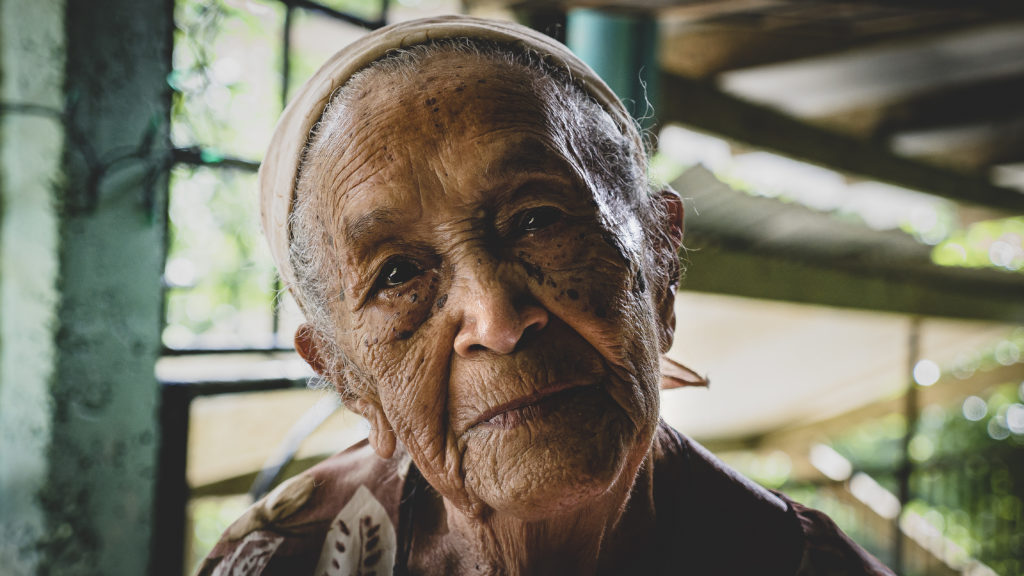
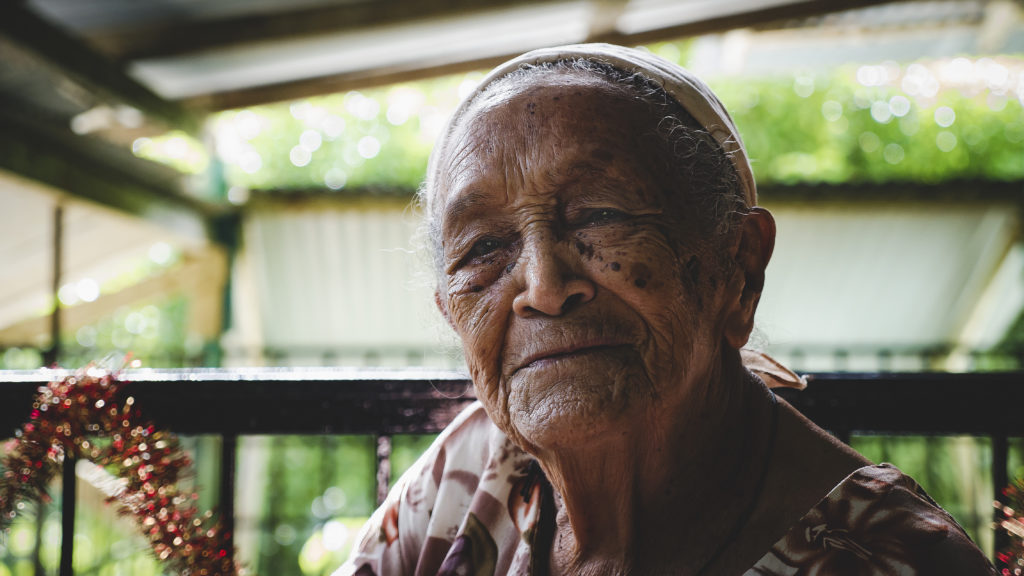
She posed for my pics with a century of confidence. Looking over her shoulder, I see the mountains she lives within. Snaking its way up to her house, the road is not for the faint of heart. This version of it is the wide version – the narrow version I rather not think about.
The evening drawing to a close, another story surfaces; the one I’d leave Julia’s home with.
She would get up at 4am every morning and bathe in the crystalline stream that veins through the mountain and alongside her property. I’m sure this habit blessed her with many, many more years.
While she can no longer make it down to the stream, I imagine the sunrise greeting Julia with two things – a dark cup of coffee and a new day full of family, life and 102 years of memories.
–
Julia is the oldest resident of Aripo and the oldest living Carib in Trinidad and Tobago. Born on the 2nd of July, 1918, her family moved to Aripo to work on the cocoa plantations. You can read more about her and her family here.
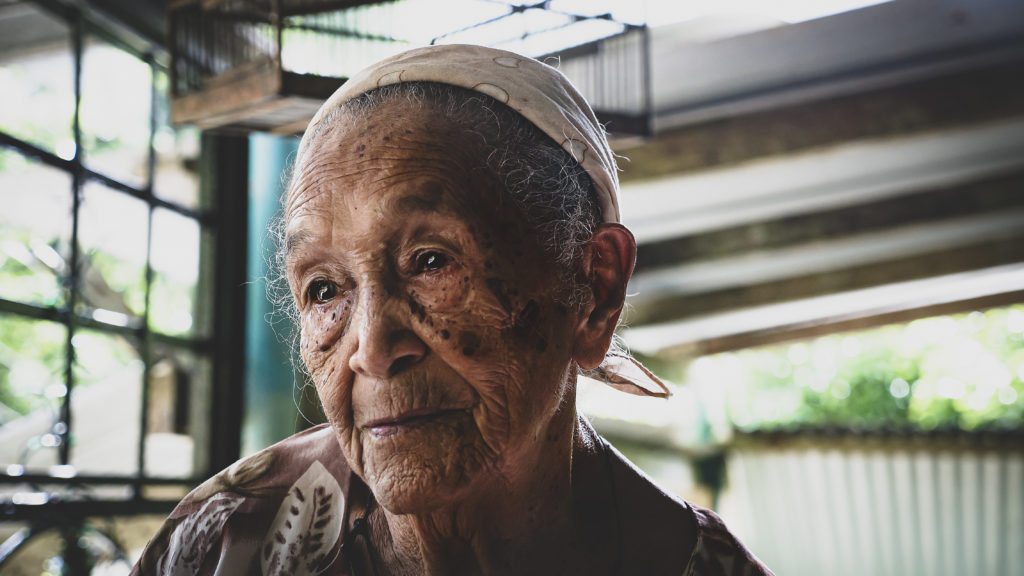
Written and photographed by Dominic de Bourg

You leave us standing here asking for more! Bravo on the photos. What a beauty.